
0086-13812610917


For many international buyers, sourcing stainless steel chimney parts or sheet metal components is not only about finding a manufacturer. It is about building a supply chain that can support product development, sampling, batch consistency, packaging, delivery, and after-sales stability.
A chimney pipe, rain cap, grill grate, sheet metal shield, or custom bracket may look simple from the outside. But for OEM projects, details decide success. Small differences in material thickness, hole position, locking tolerance, surface finish, weld quality, and packaging can affect installation, assembly, customer reviews, and repeat orders.
This article explains how OEM buyers should evaluate and source stainless steel chimney and sheet metal components from design to shipment.
Before sending a drawing or asking for a quotation, buyers should define what the part needs to do.
Is it a chimney flue part exposed to heat and weather?
Is it a BBQ mesh used for outdoor cooking?
Is it a sheet metal shield for equipment protection?
Is it a rain cap designed to stop water and debris?
Is it a bracket carrying load or supporting a pipe?
Is it a decorative fireplace component?
Different functions require different material, thickness, welding, surface treatment, and tolerance control.
For example, a rain cap needs weather resistance and shape stability. A chimney pipe needs roundness and connection accuracy. A BBQ grate needs welding strength and clean edges. A sheet metal shield may need accurate bending and surface finish.
Stainless steel is a broad category. Different grades offer different corrosion resistance, forming performance, heat resistance, and cost level. Buyers should not simply write “stainless steel” in a drawing and expect the supplier to choose the correct material.
Important material questions include:
Which stainless steel grade is required?
Is the part used indoors or outdoors?
Will it contact heat, moisture, grease, smoke, or chemicals?
Does the part need polished, brushed, powder-coated, or natural finish?
Is food contact involved?
Are there market-specific requirements?
The more clearly the material is defined, the fewer problems will appear during production.
Not every metal part is best made by the same process. Depending on the structure, production may involve:
laser cutting;
stamping;
rolling;
bending;
welding;
spinning;
polishing;
surface treatment;
powder coating;
assembly;
packaging.
A chimney pipe requires rolling and welding accuracy. A bracket may require cutting and bending. A grill mesh may require wire forming and welding. A rain cap may require forming, trimming, and assembly. A custom sheet metal shield may require precise bending and surface protection.
Good OEM sourcing means matching the product design with the right manufacturing process.
Drawings and quotations are not enough. Samples are essential for OEM projects.
A sample helps confirm:
dimension accuracy;
assembly fit;
surface finish;
weld appearance;
edge safety;
material thickness;
packaging method;
installation feeling;
visual quality.
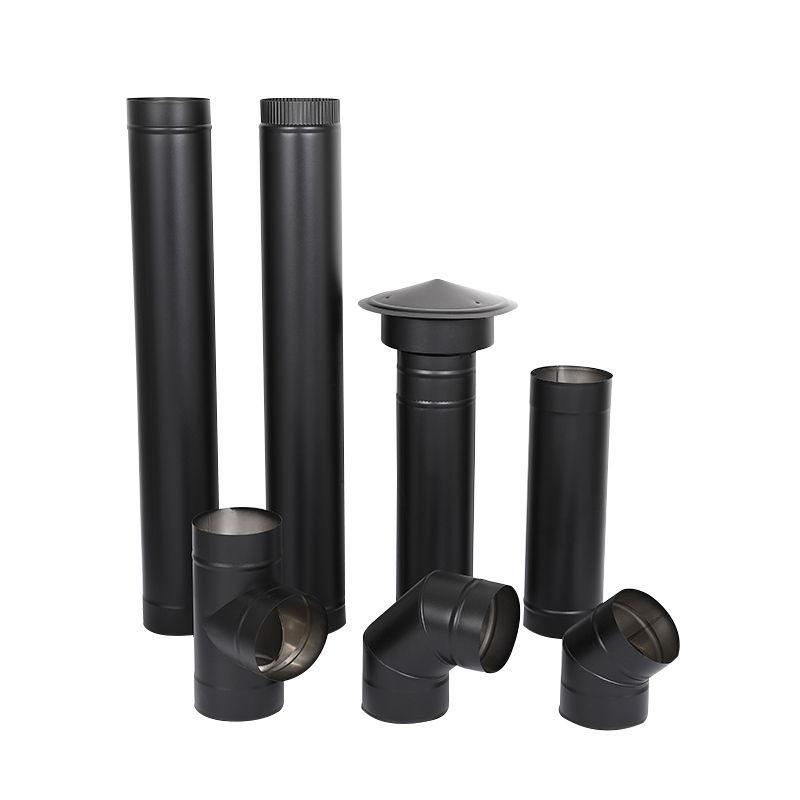
For chimney systems, sample assembly is especially important. Straight pipes, bends, tees, caps, and adapters should be tested together. A single part may pass inspection, but the system may still fail if the parts do not fit smoothly.
OEM buyers should not wait until production is finished to define quality requirements. A clear standard should be confirmed before mass production.
The standard may include:
critical dimensions;
tolerance range;
surface scratch allowance;
weld requirements;
roundness;
coating thickness;
edge burr control;
packaging protection;
label placement;
carton strength;
inspection method.
For export products, packaging should be part of the quality standard. Chimney pipes and sheet metal parts can be dented or scratched during shipment if packaging is weak.
Packaging is often ignored until the end, but it can affect both cost and customer experience.
Different sales channels need different packaging:
bulk packaging for contractors;
retail cartons for stores;
private-label packaging for brands;
e-commerce packaging for parcel delivery;
pallet packaging for container shipment.
For chimney kits, packaging should prevent deformation and make components easy to identify. For BBQ mesh and oven parts, packaging should prevent scratches and protect sharp edges. For powder-coated products, surface protection is especially important.
A supplier with machines can make parts. A supplier with product logic can help buyers avoid mistakes.
For chimney systems, the supplier should understand pipe compatibility, accessory matching, locking design, rain cap function, and installation route.
For BBQ and oven parts, the supplier should understand heat, grease, cleaning, welding, and user handling.
For sheet metal components, the supplier should understand bending sequence, tolerance, surface protection, and assembly fit.
This product understanding is what turns a manufacturer into a long-term OEM partner.
Many buyers start with one product, such as a chimney flue pipe or BBQ grate. But long-term business often requires a complete product range.
A chimney buyer may later need elbows, tees, rain caps, brackets, fire stop parts, and full kits.
A BBQ buyer may later need grill plates, fire pits, oven racks, handles, trays, and custom accessories.
A sheet metal buyer may later need shields, brackets, panels, enclosures, or equipment covers.
Choosing a supplier with broader fabrication ability can make product expansion easier.
Manufacturers with chimney system products, fireplace parts, oven components, barbecue mesh, rain caps, flue kits, accessories, and custom sheet metal capability are well positioned for OEM buyers. They can support both standard product supply and customized development.
This matters because international buyers increasingly need flexible suppliers. Markets change quickly, product designs update often, and brands need differentiation. A supplier that can help with samples, customized dimensions, product matching, and packaging has more value than a factory that only quotes standard items.
OEM sourcing for stainless steel chimney and sheet metal components requires more than price comparison. Buyers should evaluate product function, material, process, sample quality, mass production standards, packaging, and supplier product understanding.
From chimney flue kits to rain caps, from BBQ mesh to oven parts, from sheet metal shields to custom stainless steel components, a reliable OEM supplier should help buyers move from drawing to sample, from sample to production, and from production to stable repeat orders.
For long-term success, the best supplier is not simply the one with the lowest price. It is the one that understands the product, controls the details, protects the shipment, and supports product line growth.
Tags:OEM chimney parts, custom stainless steel chimney, sheet metal components, stainless steel fabrication supplier, custom metal products, chimney manufacturer, BBQ mesh supplier










Copyright © 2026 Suzhou Ruilun Metal Products Co., Ltd. Keywords:Stainless Steel Chimney,Chimney Fireplace,Stainless Steel Chimney Parts


 You are here :