
0086-13812610917


Most chimney problems do not begin with a dramatic failure. They start quietly: a small amount of condensation, a loose joint, a mismatched adapter, weak draft on cold mornings, or soot accumulating faster than expected. Over time, these small issues can turn into corrosion, smoke leakage, unstable stove performance, difficult cleaning, and customer dissatisfaction.
For chimney distributors, contractors, stove brands, and homeowners, understanding why chimney systems fail is the first step toward choosing better flue products.
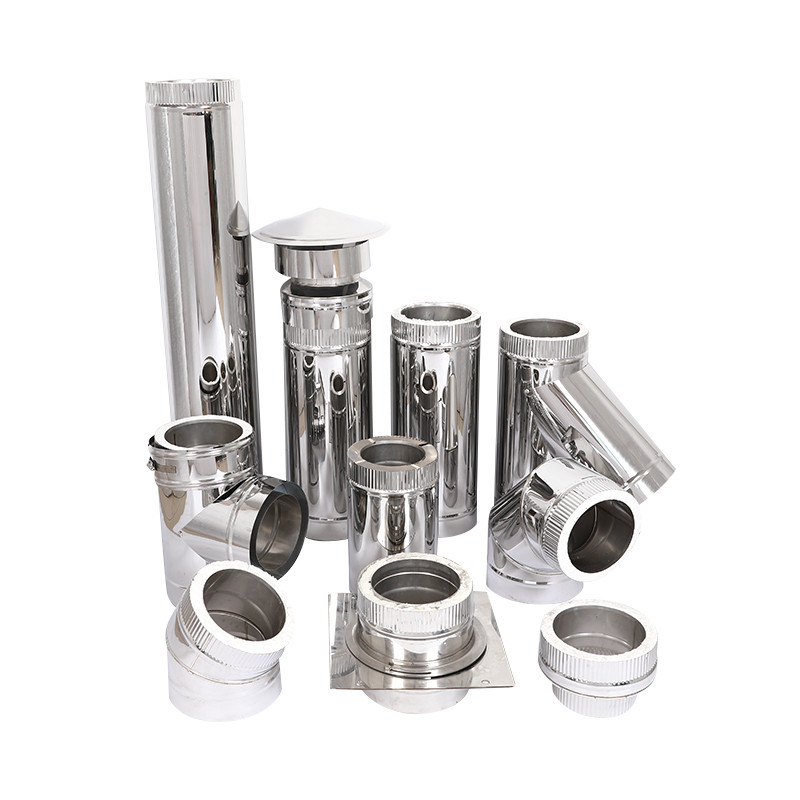
Condensation occurs when hot combustion gases cool down and moisture forms inside the chimney. This is more likely when the flue route is too cold, too long, poorly insulated, or exposed to outdoor temperatures.
Condensation is not just water. In real stove and fireplace systems, moisture can mix with combustion residues and create corrosive deposits. These deposits may attack the inner wall of the flue, especially if the material is not suitable for the fuel type or operating conditions.
How to reduce the risk:
choose proper flue diameter;
avoid overly long horizontal sections;
consider insulated chimney sections for cold or outdoor routes;
use compatible rain caps and termination parts;
ensure the appliance operates under suitable conditions;
provide cleaning access through tees or inspection sections.
Wood stoves, pellet stoves, fireplaces, and boilers produce combustion gases that may contain moisture, acids, soot, and fine particles. Over time, these substances can affect ordinary steel pipes or low-grade materials.
Stainless steel chimney systems are widely used because they offer better resistance to heat and corrosion. However, stainless steel grade, wall thickness, welding quality, and maintenance still matter.
A low-quality pipe may look acceptable when new, but after repeated heating, cooling, rain exposure, and residue buildup, weak points can appear at welds, joints, or poorly protected sections.
Draft is the force that moves smoke and combustion gases through the chimney. Poor draft can cause smoke smell, weak combustion, soot buildup, or difficulty starting the stove.
Common causes include:
incorrect pipe diameter;
insufficient vertical height;
too many bends;
long horizontal sections;
cold outdoor chimney route;
blocked rain cap or mesh;
dirty flue;
negative indoor air pressure;
poor termination location.
The solution is not always a stronger fan or a taller pipe. Sometimes the system needs better route design, fewer bends, improved insulation, better termination protection, or more regular maintenance.
A chimney system is only as strong as its weakest connection. If straight pipes, bends, tees, adapters, locking bands, and rain caps come from different systems, small tolerance differences can create large installation issues.
Mismatched parts may cause:
loose joints;
poor sealing;
difficult assembly;
misalignment;
unstable support;
unattractive appearance;
cleaning difficulty.
For installers, this creates extra labor. For distributors, it creates after-sales complaints. For end users, it reduces confidence in the whole stove system.
This is why a complete chimney kit from one compatible product family is often better than mixing cheaper parts from different sources.
Chimneys are exposed to wind, vibration, and thermal expansion. Outdoor vertical sections especially need proper mechanical support. If brackets are too far apart, poorly installed, or incompatible with the pipe system, the flue may move, stress the joints, or become noisy.
Support failure usually does not happen immediately. It develops over time as wind, temperature changes, and maintenance movement weaken the installation.
Good chimney design includes proper wall brackets, roof supports, locking bands, and base support where required.
Every chimney system needs maintenance. If the system does not include a tee, cleanout cap, inspection section, or removable termination where needed, cleaning becomes difficult.
When cleaning is difficult, users delay it. When maintenance is delayed, soot, ash, and condensate accumulate. This affects draft and increases corrosion risk.
A good flue kit should be designed not only for installation, but also for future maintenance.
Without a proper rain cap or cowl, rainwater, leaves, insects, and birds may enter the chimney. In some locations, bird nests or debris can create serious blockage.
A rain cap should protect the chimney without restricting exhaust flow. Mesh designs can help prevent animal entry, but they also require inspection because soot or debris can accumulate on the screen.
Manufacturers play a major role in system reliability. Better design and production control can reduce many field problems.
Key manufacturing priorities include:
accurate pipe roundness;
consistent locking tolerance;
smooth welds;
stable stainless steel material selection;
compatible accessories;
secure brackets and caps;
clear labeling;
protective packaging;
custom product support for different markets.
For export customers, packaging is particularly important. A pipe that arrives dented or deformed may be difficult to assemble, even if the material itself is good.
Buyers should not ask only for price per pipe. A better evaluation includes:
Does the supplier provide a full system?
Are bends, tees, caps, brackets, and adapters compatible?
Can the supplier support single-wall and double-wall systems?
Can they produce black powder-coated and stainless steel finishes?
Do they offer OEM packaging?
Can they provide samples?
Are product dimensions consistent across batches?
Can they support custom parts based on drawings?
These questions help buyers reduce risk before the first container is shipped.
Chimney system failure is rarely caused by one single reason. It is often the result of several small problems: condensation, corrosion, poor draft, weak support, mismatched accessories, missing cleanout access, and weather exposure.
A reliable stainless steel chimney system should be designed as a complete solution. Material, pipe structure, route planning, accessories, support, rain protection, and maintenance access all matter. For distributors and OEM buyers, choosing a manufacturer that understands the whole system is the best way to reduce after-sales problems and build long-term customer trust.
Tags:chimney system failure, chimney condensation, chimney corrosion, poor chimney draft, stainless steel flue maintenance










Copyright © 2026 Suzhou Ruilun Metal Products Co., Ltd. Keywords:Stainless Steel Chimney,Chimney Fireplace,Stainless Steel Chimney Parts


 You are here :