
0086-13812610917


A fireplace or wood stove is only as reliable as the chimney system behind it. The visible firebox may create the warmth, but the chimney flue is responsible for carrying smoke, combustion gases, heat, and moisture safely out of the building. For homeowners, contractors, distributors, and heating equipment brands, choosing the right stainless steel chimney system is therefore not just a purchasing decision; it is a long-term safety and performance decision.
Stainless steel chimney systems are widely used in modern residential and commercial heating installations because they combine heat resistance, corrosion resistance, structural strength, and modular installation flexibility. Compared with traditional masonry chimneys, a well-designed metal flue system can be easier to install, easier to maintain, and more adaptable to different building layouts.
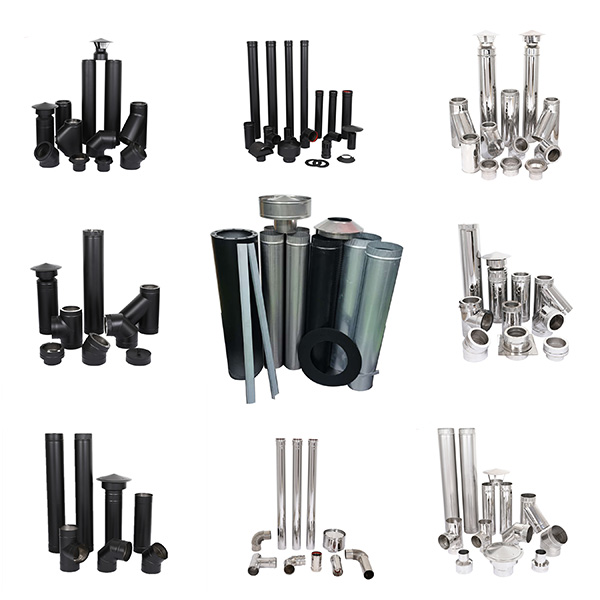
Combustion flues operate in a demanding environment. The inner wall of the chimney is exposed to hot gases, moisture, acidic condensate, soot, and thermal cycling. The outer surface may face rain, snow, wind, temperature changes, and long-term weather exposure. For this reason, material stability is critical.
Stainless steel offers several practical advantages for chimney applications:
It resists corrosion better than ordinary carbon steel.
It maintains good strength under high-temperature operating conditions.
It can be fabricated into straight pipes, elbows, tees, adapters, collars, and modular sections.
It provides a clean appearance suitable for visible indoor or outdoor installation.
It is suitable for a wide range of heating appliances, including wood stoves, pellet stoves, fireplaces, heaters, and boiler-related flue systems.
For international buyers, the value of stainless steel chimney products is not only in the material itself, but in how the full system is engineered: pipe thickness, welding quality, locking method, insulation design, surface finish, accessories, and packaging all affect final project performance.
One of the first decisions buyers face is whether to choose a single-wall or double-wall chimney system.
A single-wall stainless steel flue pipe is often used in areas where clearance, insulation, and code requirements allow it. It is relatively simple, lightweight, and cost-effective. It is commonly used for connecting appliances to a chimney route in controlled indoor environments.
A double-wall insulated chimney system is designed with an inner and outer wall, often with an insulation layer or air gap between them. This structure helps reduce outer surface temperature, improve draft stability, and protect nearby building materials from excessive heat exposure. It is especially useful when the chimney runs through ceilings, walls, roofs, or outdoor sections.
For distributors and project buyers, double-wall systems often provide stronger market value because they address safety, thermal efficiency, and installation convenience at the same time.
Modern stainless steel chimney systems are usually modular. Instead of fabricating every flue on site, installers can assemble straight lengths, bends, tees, wall brackets, rain caps, fire stops, and adapters into a complete ventilation route.
This modular design brings several benefits:
Faster installation for contractors.
Better dimensional consistency for batch projects.
Easier inventory planning for wholesalers and distributors.
More convenient replacement of individual sections.
Cleaner appearance for residential and commercial projects.
For export buyers, modular systems are also easier to package, ship, and manage as product kits. Standardized sizes, labeled components, and compatible accessories can reduce installation errors and customer complaints.
Stainless steel chimney systems can be used in many heating and ventilation scenarios.
For residential fireplaces, they help create a safe route for smoke and combustion gases while matching modern interior and exterior design needs.
For wood stoves, the flue system supports steady draft, reduces smoke leakage risk, and helps maintain heating efficiency.
For pellet stoves, chimney flues must remove combustion gases efficiently while handling moisture and acidic byproducts from combustion.
For commercial buildings, restaurants, villas, cabins, and hospitality projects, stainless steel flues provide a clean and durable chimney solution.
For heaters and boiler-related flue systems, stainless steel chimney sections can support customized ventilation routes according to equipment layout.
Before ordering a stainless steel chimney system, buyers should confirm several key details.
The heating appliance type: wood stove, pellet stove, fireplace, boiler, heater, or multi-fuel stove.
The required diameter and wall thickness.
The route of installation: indoor, outdoor, through-wall, through-roof, vertical, horizontal, or offset.
The required accessories: elbows, tees, wall brackets, fire stop rings, roof flashing, rain caps, adapters, and inspection parts.
The expected operating temperature and fuel type.
The local installation requirements and building regulations.
The packaging and labeling requirements for export or retail sales.
By clarifying these details early, buyers can select a chimney system that is easier to install and more reliable in actual use.
A chimney system is not a single pipe. It is a complete set of metal ventilation components that must fit together accurately. A specialized manufacturer can support not only pipe production, but also product matching, accessory development, sample production, and custom manufacturing based on buyer requirements.
For distributors, OEM brands, and project contractors, this matters because product consistency affects inventory, installation quality, and long-term customer satisfaction. A reliable chimney manufacturer should be able to support different diameters, surface finishes, wall structures, locking methods, and accessory combinations.
A stainless steel chimney system is a key part of any fireplace, wood stove, or heating appliance installation. It affects draft performance, safety, heat efficiency, corrosion resistance, appearance, and maintenance convenience.
For buyers looking for chimney flue products, the best choice is not simply the lowest-cost pipe, but a complete system that combines durable stainless steel construction, compatible accessories, reliable assembly, and application-specific design. Whether used in homes, villas, commercial buildings, or heating equipment projects, a well-designed stainless steel chimney system can provide long-term value for both installers and end users.
Tags:stainless steel chimney system, fireplace chimney, wood stove chimney flue, stainless steel flue pipe, chimney manufacturer, chimney flue kit










Copyright © 2026 Suzhou Ruilun Metal Products Co., Ltd. Keywords:Stainless Steel Chimney,Chimney Fireplace,Stainless Steel Chimney Parts


 You are here :